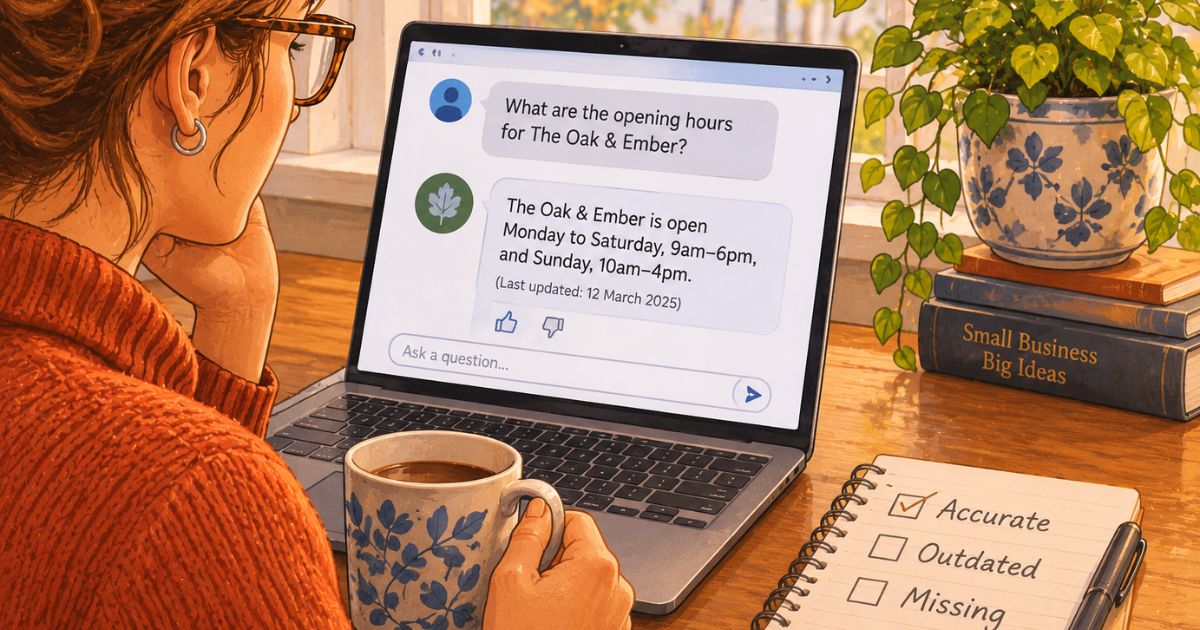

Somewhere right now, a potential customer is asking an AI assistant whether your business is any good. They won’t see your website, your carefully written About page or your best review. They’ll see a summary, and you haven’t read it.
The shift
AI assistants now sit between brands and their customers, summarising what is known about a business before anyone visits it. Early research suggests the picture is mixed rather than alarming. BrightEdge’s analysis found negative sentiment is uncommon, appearing in about 2.3% of brand mentions in Google AI Overviews and about 1.6% in ChatGPT. Seer Interactive’s study of its own brand, tracking 1,562 prompts across six AI platforms between May and June 2026, found inaccurate answers were rare, but that the assistants often declined to answer at all, doing so 80.3% of the time on comparison questions. That matters because an answer that leaves you out never shows up as a lost sale.
How it actually works
So the real risk usually isn’t a scandalous falsehood. It is absence: being left out of the comparison, or being described with outdated details. The check is simple and takes about an hour. Ask the questions a customer would ask. What is [your brand]? Is it any good? How much does it cost? How does it compare with [competitor]? What is the best [your category] for [a particular type of buyer]? If you run an affiliate site, ask about your own name and site too. Run them across several assistants, such as ChatGPT, Gemini, Perplexity and Claude, and record the date, the answer and any sources cited. Then mark each answer as accurate, outdated, missing or unfair.
The honest complication
Treat the results with caution. Answers vary between assistants, sessions and wording, so one check is a snapshot, not a verdict. Seer’s study covered a single brand, and BrightEdge is an SEO platform vendor, so neither is a neutral benchmark. And you can’t edit what an AI says. You can only influence the sources it draws on, and corrections may take time to appear.
The practical takeaway
Repeat the check monthly and keep the log. Where you find errors, fix the source first: update your own pricing, About and FAQ pages so the facts are clear and consistent, then correct third-party profiles and listings. Where you’re missing from comparisons, ask whether your site actually says who you’re for and how you differ. And answer the awkward question honestly in your own content, because an assistant will otherwise answer it for you.
Your customers have already read your summary. It’s worth reading it too.
Genuinely curious: have you ever asked an AI assistant about your own business, and did anything surprise you? Tell me in the comments.