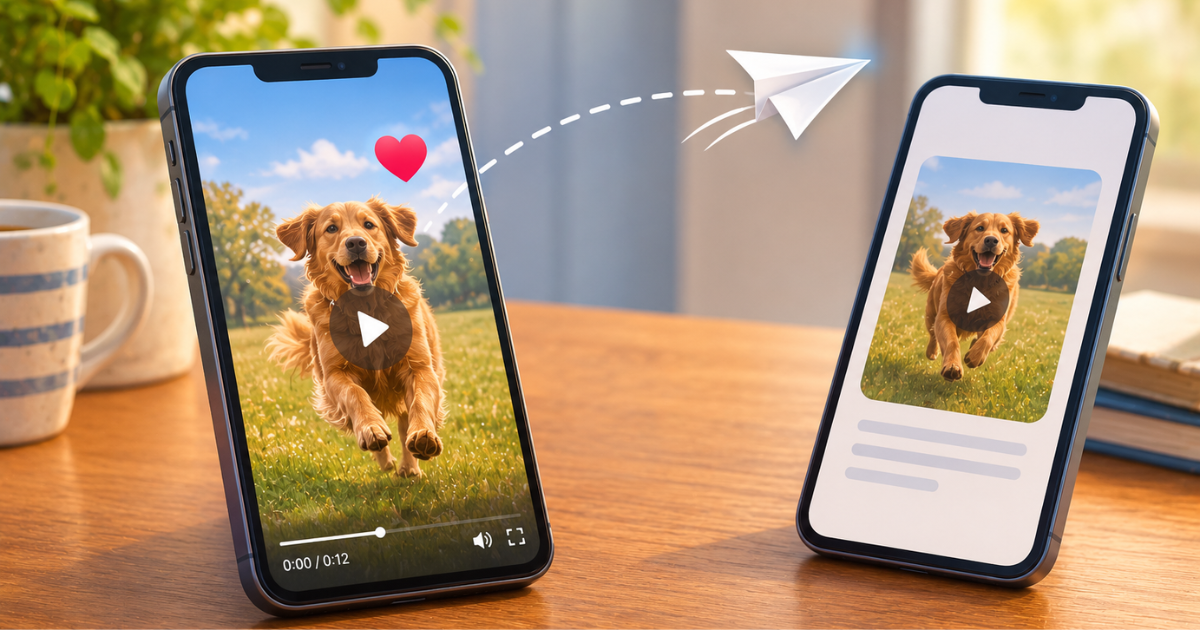

A small business posts a polished photo of a new product. It collects a healthy number of likes by the evening and feels like a success. The following week, a plain thirty-second video showing how to use it collects fewer likes, but gets sent to friends and turns up in front of people who have never heard of the business. Same account, same audience, different signals.
The shift
For years, likes were the number everyone counted, largely because it was the one the platform put in front of you. The ranking systems look at more than that. In January 2025, Instagram’s head, Adam Mosseri, named the three signals that matter most for ranking: watch time, likes and sends, and he pointed creators to the ratios in their insights: average watch time, likes per reach and sends per reach. Likes haven’t disappeared. But they are one of three, and they are not the one that carries a post to new people.
How it actually works
Watch time asks whether people stayed. A short video that most viewers watch to the end, or replay, tells the system it was worth showing. Sends, which are posts people share with a friend by private message, tell it that someone thought another person should see this. Mosseri has said that, in his experience, sends per reach correlate with overall reach more than anything else, and reports of his explanation suggest sends count slightly more for reaching people who don’t follow you, while likes count slightly more with people who do.
Many marketing guides add saves to the list, on the logic that saving something implies you intend to come back to it. Note the measure as well: each signal is judged relative to how many people saw the post. A small audience that acts can outperform a large one that scrolls past.
The honest complication
Be careful with the folklore. Instagram has publicly named watch time, likes and sends as its top three. The claims that saves outweigh likes, and the multipliers sometimes quoted for sends, come from third-party analysts rather than from the platform, and Instagram doesn’t publish exact weightings. Most of the public detail also concerns Instagram, so other platforms may work differently. And chasing the signals can backfire: a post that begs for a send or a save can feel like bait, and audiences recognise it.
The practical takeaway
Judge posts by ratios, not totals. In your insights, look at average watch time, likes per reach and sends per reach, and compare each post with your own last ten rather than with someone else’s account. Make something a person would genuinely forward: a useful tip, a checklist, a relatable observation. Open with the point, because early drop-off drags watch time down, and keep each piece as short as the idea allows. Ask for a send only where it makes natural sense, such as “send this to whoever keeps asking you.”
A like says “I saw this.” A send says “you should see this.” Only one of them travels.
Genuinely curious: which of your posts has been sent on to friends the most, and what did it have in common? Tell me in the comments.