
Why Do We Do That?
Why Do We Always Think the Other Queue is Moving Faster?
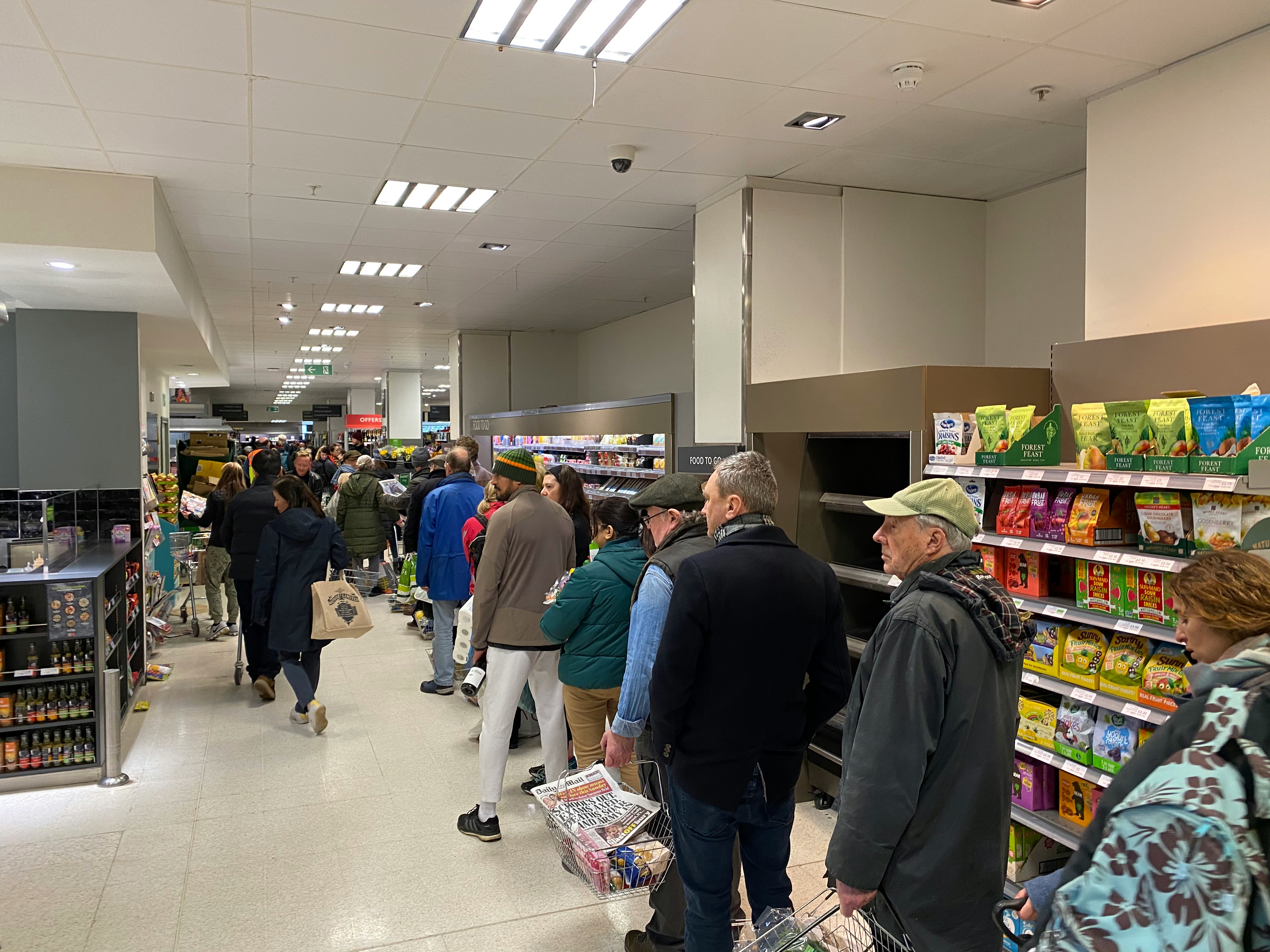
You’ve done it. Everyone has done it. You assess the queues at the supermarket checkout with the quiet intensity of a military strategist, select the one that is — objectively, demonstrably — the shortest, and join it. Thirty seconds later, the queue you didn’t choose is moving like a freshly greased conveyor belt while yours has ground to a halt behind someone who has decided that now, right now, is the ideal moment to query a price.
You consider moving. You calculate. You stay, because the one time you switch will be the one time your original queue surges forward. You know this. It has happened before. It will happen again.
So, is this just bad luck, or is something more interesting going on?
Mostly, it’s maths — and the maths is not on your side. In a supermarket with, say, ten checkouts, the odds are that you are in the fastest queue exactly one time in ten. The other nine times, something somewhere is moving faster than you. The trouble is, you only notice the queues that are beating yours. The ones moving at the same speed, or slower, simply don’t register. This is called the negative experience bias — bad outcomes grab attention; neutral or positive ones quietly go about their business.
There’s also a well-documented psychological phenomenon called queue anxiety, which researchers at the Georgia Institute of Technology have actually studied with some rigour. They found that people consistently overestimate how long they’ve been waiting by as much as 36 percent. Your queue isn’t necessarily slower. You’re just paying more attention to your own suffering than to everyone else’s.
The really cruel twist is something called the inspection paradox. When you join a queue, you are statistically more likely to join a long one than a short one — simply because long queues contain more people, and you are one of those people. Short queues, almost by definition, have fewer people to join them. You are not unlucky. You are a victim of probability.
None of this, of course, will make you feel better when the person ahead of you produces a fistful of coupons from 2019.
But here’s a small consolation: studies consistently show that a single-serpentine queue — one line feeding multiple tills, like you see in airports and banks — is fairer and faster than individual queues. Supermarkets don’t use them largely because they look longer and put customers off.
So, the queue you’re standing in was probably a bad idea before you even arrived.
You’re welcome.
Is this your experience or is it just me? Would love to hear your thoughts in the comments section below.