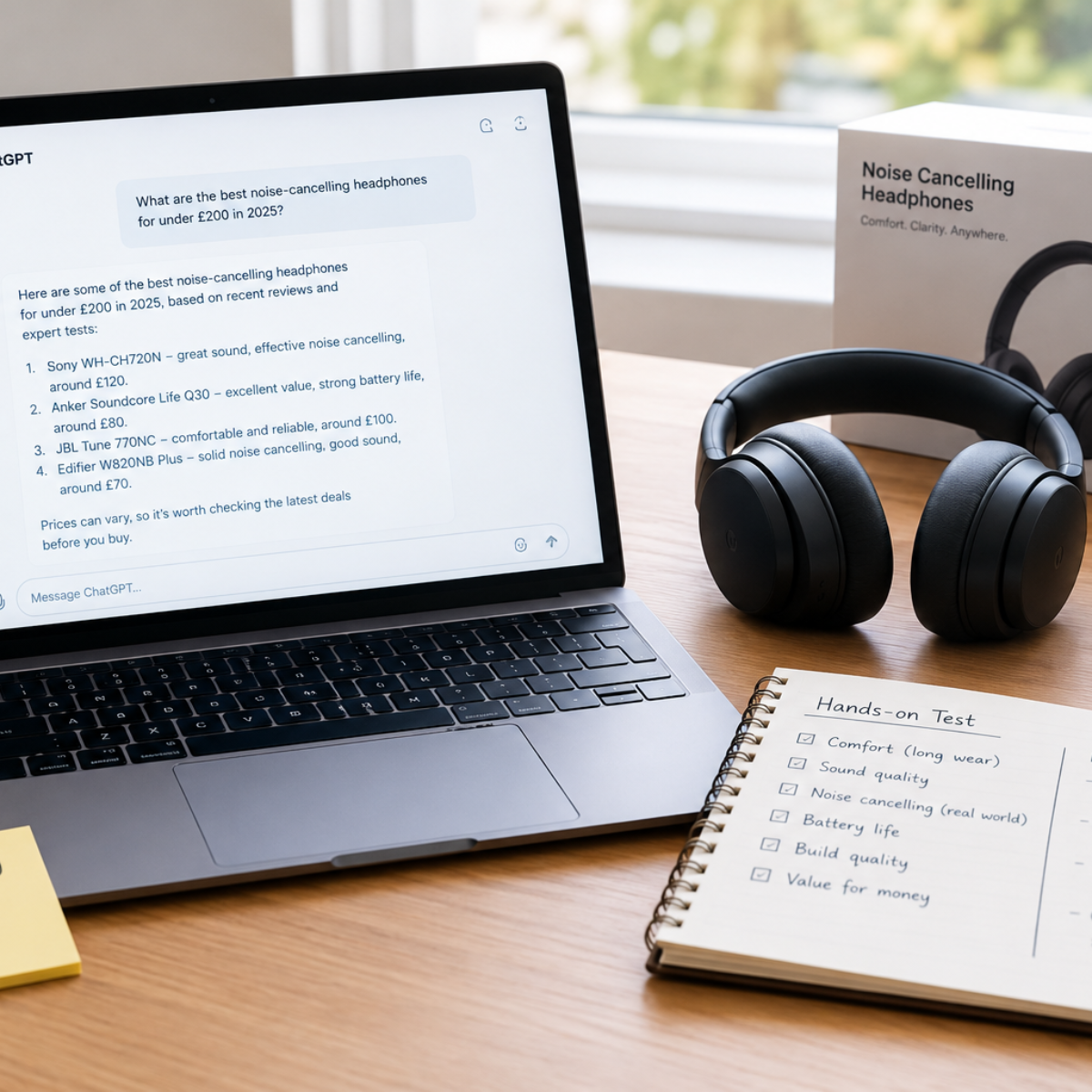

Someone asks an AI assistant for the best budget robot vacuum for a house with a dog. Seconds later they have a shortlist, a comparison and a recommendation, with no scrolling, no ten open tabs and no “Best Robot Vacuums of 2026” article. Somewhere, a 4,000-word roundup with thirty-one affiliate links goes unread.
The shift
That question was once the engine of affiliate income, and the numbers show how quickly it is changing. Chartbeat data reported by eMarketer shows Google referral traffic to small publishers fell by nearly 60% year on year to June 2026, with medium and large publishers down roughly 40% and 43%. Fintel Connect reports that 69% of publishers are worried that AI Overviews and algorithm changes are cutting traffic and revenue. One affiliate specialist told Press Gazette that review and buyers’ guide traffic had fallen by as much as half at some publishers, with affiliate revenue down 20% to 40%.
Affiliate marketing itself isn’t vanishing, since brands are still investing in it, but the route from a search to a sale is being rerouted.
How it actually works
AI assistants assemble the comparison a roundup used to provide, drawing on specifications, retailer data, reviews and online discussion. Listing features, prices and pros and cons is exactly the work machines do well. The affiliate model needs a click to attribute the sale, so when the answer arrives without one, there is no tracked link and no commission. What an assistant can’t supply is first-hand evidence: a product actually used, a result measured, a recommendation shaped for one particular buyer. That is where Wirecutter is looking, extending its testing into video and podcasts rather than relying on search to carry its recommendations.
The honest complication
Being cited by an AI assistant is not the same as being paid by one. Analyst Julian Henrichs has cautioned publishers against overestimating the value of AI citations while attribution systems remain immature. Your content may inform the answer, shape the recommendation and earn nothing measurable.
The practical takeaway
Stop competing on summaries and start competing on evidence. Add what can’t be generated: your own photos, test notes, measured results and a plain statement of who each product is wrong for. Narrow your focus to a specific type of buyer rather than a whole category. Spread your reach across video, search and email so a single traffic source can’t switch you off. An email list is the clearest example, because it gives you a direct line to readers that no assistant can intercept. Then track which channels actually produce sales rather than assuming.
The roundup isn’t dead. The roundup that only summarises might be.
Genuinely curious: how much of your affiliate traffic still comes from search? Tell me in the comments.