
A reader clicks an affiliate link in a review, buys the product and later discovers the page was earning commission all along. They aren’t upset about the commission. They’re upset that nobody told them.
The shift
Disclosure is easy to treat as small print, and with Black Friday less than three weeks away, a great deal of new affiliate content is about to go live. In the UK, the Advertising Standards Authority (ASA) is clear that content containing a link or code that pays you for clicks or sales counts as advertising. That includes trackable links from brand programmes such as Amazon Associates and from networks such as Awin, Skimlinks and LTK. The question isn’t whether you are doing advertising. It’s whether the reader can tell.
How it actually works
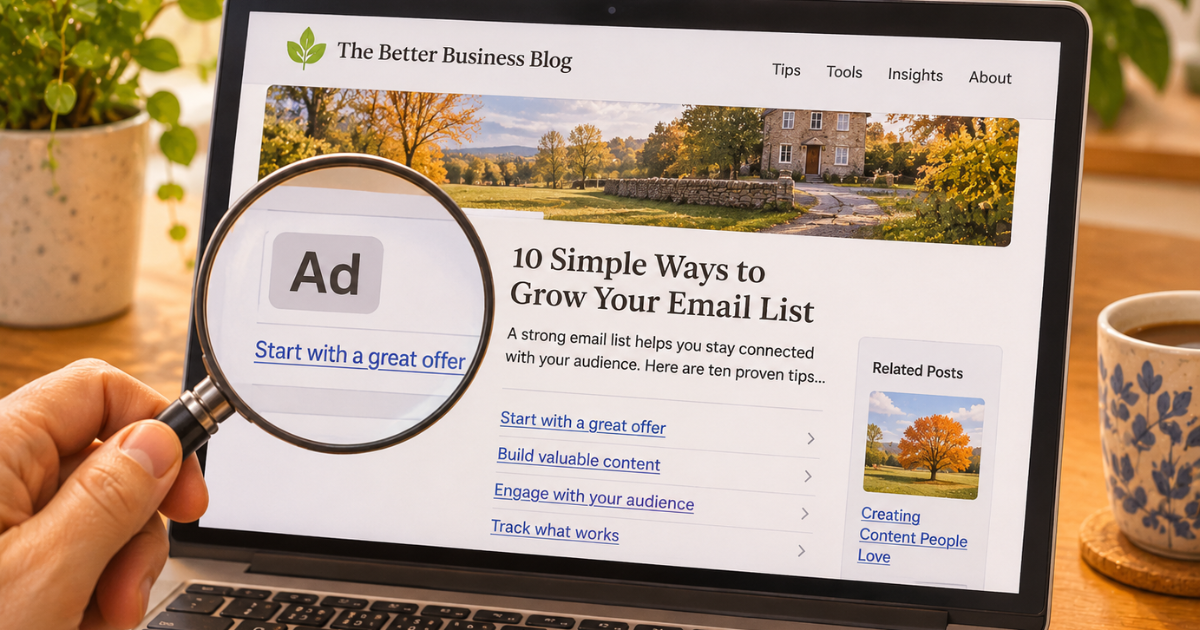
The test is whether it is obvious from the context that the content is an ad. Where it isn’t, the ASA expects a clear, prominent label upfront, noticed before the reader gets into the rest of the content, and “Ad” is its main example of a label that works. For a blog, guidance summarised by Lilach Bullock says to put the label in the title when the whole page is affiliate content, or to label the relevant sections when only part of it is. It should not be buried among other hashtags or links.
Vague alternatives don’t help. The ASA recommends against using “Aff” on its own, because consumers are unlikely to understand it, and an Instagram Story labelled with the word “affiliate” was found insufficient, partly because the term isn’t widely understood. Responsibility is also shared: in one ruling on an influencer’s post, the ASA held the retailer jointly responsible with the person posting, and the disclosure was judged not prominent enough. Brands that run affiliate programmes have their own reasons to care.
The honest complication
Treat this as a guide, not legal advice. The ASA is the UK’s advertising regulator, but your readers may be elsewhere, where the US Federal Trade Commission and other bodies apply their own rules, and the guidance is updated from time to time. Disclosure also has a cost. Some readers may click less once they see the label, and a label doesn’t fix a misleading claim. It tells people you are being paid. It does not excuse a review for being wrong.
The practical takeaway
Label before the first link, in plain words: “Ad”, “Advert” or “Advertisement”. Put it where it is seen without clicking, in the title for a whole-page affiliate post or on the relevant section otherwise. On social media, make it the first thing in the caption, not the last of a pile of hashtags. I would also add one plain sentence near your first link saying you earn a commission if someone buys through it. Check each programme’s own terms, because brands can have additional requirements. And before Black Friday, audit your old posts as well as your new ones, since the old ones are about to get traffic too.
A label costs you very little trust. Being found without one costs you a great deal.
Genuinely curious: where do you place your affiliate disclosure, and has anyone ever told you they noticed it? Tell me in the comments.